Is there any flavour or scent more symbolic of the holiday season as peppermint? Candy canes, peppermint mochas… peppermint EVERYTHING! And in general, peppermint is one of those herbs that feels instantly soothing for us – a warm cup of peppermint tea, a cooling muscle rub, a refreshing, cleansing scent.
But what about our canine companions? Can dogs have peppermint?
The short answer is: Yes, but there are some caveats. When used properly, peppermint can have some great benefits for our furry friends. But some forms of peppermint can be harmful, so knowing the difference is key.
Let’s walk through what’s safe, what’s dangerous, and how peppermint can become a helpful, natural remedy for your pup.
The Benefits of Peppermint for Dogs
Peppermint is a gentle herb with cooling, anti-inflammatory, and digestive benefits. When given in very small, food-safe amounts, it may help with:
1. Digestive Upset & Gas
Peppermint has natural carminative properties, meaning it helps reduce gas, bloating, and cramping.
Why it helps:
- Peppermint relaxes the smooth muscles in the gut.
- It eases spasms that can contribute to stomach discomfort.
- Its cooling compounds soothe inflammation in the digestive tract.
A little peppermint can support dogs who experience:
- Occasional gas
- Mild stomach upset
- Motion sickness
2. Nausea Relief
Peppermint’s calming effect on the gut can also help dogs who get queasy.
This makes it a good option for:
- Nervous travelers
- Mild stress-related nausea
- Dogs recovering from a temporary digestive issue
3. Natural Breath Freshener
Peppermint’s antimicrobial properties can help reduce odour-causing bacteria in the mouth.
Safe ways to use it:
- A tiny pinch of dried peppermint leaf sprinkled over food
- Peppermint-infused homemade dog treats
- Peppermint tea as a water topper
(Note: This does NOT apply to peppermint oil – which is too strong and not recommended.)
4. Cooling & Soothing for Itchy or Irritated Skin (External Use)
Peppermint can be used topically to soothe:
- Hot spots
- Bug bites
- Mild skin irritation
Steeped and cooled peppermint tea can act as a gentle skin rinse thanks to its cooling sensation and mild antimicrobial effects.
When Can Dogs Have Peppermint? Safe Ways to Give
There are many times when giving peppermint to dogs is a great idea! And these are the safest ways to use it:
1. Peppermint Leaf
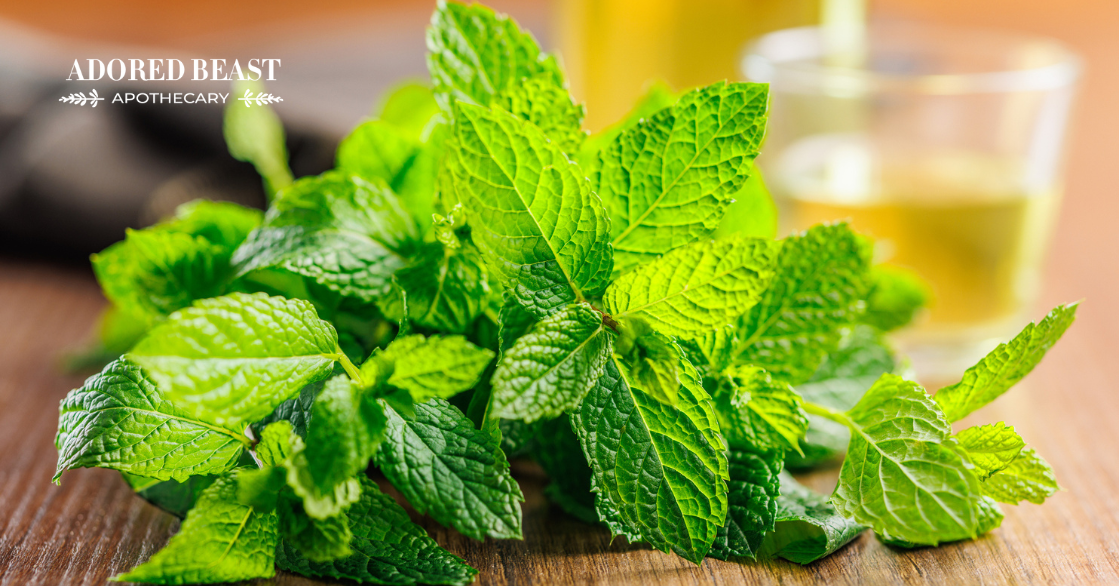
A tiny amount of food-grade fresh or dried peppermint is the safest and easiest way to give it.
Suggested amounts:
- Small dogs: A pinch
- Medium dogs: ⅛ tsp
- Large dogs: ¼ tsp
Sprinkle it on food or mix it with a little kefir for a soothing snack. Always start with the smallest amount and watch for any reaction.
2. Peppermint Tea
Peppermint tea is one of the best ways to help your dog enjoy the benefits.
How to use it:
- Brew a plain peppermint tea bag
- Allow it to cool fully
- Offer 1–3 tablespoons over food, or mix with water
- You can also freeze it into ice cubes for a cooling summer treat
Benefits of peppermint tea:
- Very mild
- Hydrating
- Supports digestion
- Helps with nausea
3. External Use: Peppermint Rinse
You can make a simple peppermint skin rinse:
Recipe:
- Brew a strong peppermint tea
- Let it cool completely
- Apply using a cloth or cotton pad to itchy or irritated areas
This provides a mild cooling effect without the dangers of essential oils.
Is Peppermint Ever NOT Safe for Dogs?
Not all forms of peppermint are dog-friendly. And there are times to skip it.
Avoid peppermint if your dog:
- Has acid reflux (peppermint can relax the LES and worsen symptoms)
- Has chronic digestive disease (always ask your vet first)
- Is pregnant or nursing
- Is a very young puppy
And the following forms of pepperming can be dangerous and should be avoided:
Peppermint Essential Oil
This is the biggest no-go. Peppermint oil is:
- Extremely concentrated
- Too strong for a dog’s liver
- A potential skin and airway irritant
- Toxic if ingested even in small amounts
Never put undiluted peppermint essential oil in your dog’s food, water, or on their skin.
Peppermint Candy, Candy Canes, Mints, Gum
These are dangerous for several reasons:
- Many contain xylitol, which is highly toxic to dogs
- Too much sugar can upset digestion
- Artificial flavouring is rough on the stomach
- Peppermint extract is too strong and can cause vomiting
Even holiday treats like candy canes should be kept well out of reach.
Peppermint Extract
Extracts are alcohol-based and far too concentrated.
If a recipe includes peppermint extract, skip it or replace with dried peppermint leaf.
Healthy Peppermint & Parsley Dog Treats
Want an easy way to share some peppermint with your dog? Make these breath-freshening, tummy-soothing treats!
Ingredients:
- 1 cup oat flour
- ¼ cup plain unsweetened applesauce
- 1 tablespoon Manuka honey (optional, for binding + sweetness)
- 1 large egg
- 1 tablespoon dried peppermint leaf (or 2 tablespoons fresh, finely chopped)
- 1 tablespoon fresh parsley, finely chopped
- 1–2 tablespoons water, as needed
Instructions:
- Preheat your oven to 325°F (165°C) and line a baking sheet with parchment paper.
- In a bowl, whisk together the oat flour, peppermint, and parsley.
- Add the egg, applesauce, and honey, mixing until a soft dough forms.
- If the dough feels dry, add 1–2 tablespoons water until it comes together.
- Roll the dough out to about ¼-inch thickness.
- Use a small cookie cutter (hearts and stars look adorable!) or cut into squares.
- Place treats on your prepared sheet and bake for 18–22 minutes, or until firm and lightly golden.
- Let them cool completely before serving.
These will keep in the fridge for up to 7 days, or in the freezer in an air-tight container for 2-3 months (if they last that long!).
Reach for these treats:
- Before a car ride (for motion-sensitive dogs)
- After meals to help with breath
- As a calming bedtime snack
So, can dogs have peppermint? Yes – when it’s real peppermint leaf or mild peppermint tea, used in small, intentional amounts. Peppermint can naturally support the gut, the skin, even the mouth. Just remember, peppermint oil, candy, gum, extracts, and flavourings are unsafe and should always be avoided.
Used with care, peppermint can be a soothing, gentle herbal ally for your dog’s digestive and skin health. So, embrace the scent (and flavour) of the season and use this calming, well-loved herb for yourself and your adored beast!