In our house, we subscribe to a produce box where the company takes “odd” veggies that would normally be tossed, and boxes them up. There’s nothing wrong with these veggies – they just look a little funny. We love it ebcause it keeps them out of the landfill and gives us great variety we might otherwise not think about.
Last week, the box included parsnips. These powerhouse root veggies are not a staple in our house, so the dogs had never actually tried them. I knew the answer, but I thought others might not… so today’s post is all about “can dogs eat parsnips.”
Let’s dig into why parsnips can be a healthy choice for dogs, when they’re most beneficial, and how to serve them safely.
Can Dogs Eat Parsnips?
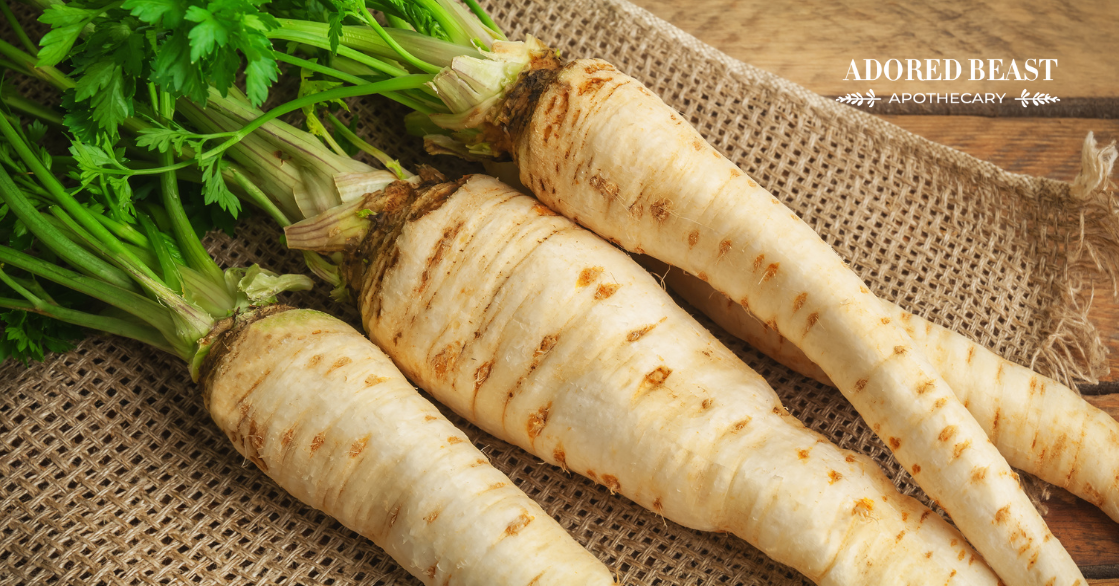
Parsnips might just look like pale carrots, but they’re totally different – and they’re something that many dogs can safely enjoy. When prepared properly, parsnips can be a nutritious, seasonal addition to your dog’s bowl, especially during the cooler months. They’re naturally sweet, easy to digest, and packed with nutrients that support whole-body health.
Parsnips may not be flashy, but they’re quietly impressive when it comes to nutrition:
Parsnips contain:
- Fibre – Supports digestion and healthy stool
- Vitamin C – Helps support the immune system
- Vitamin K – Important for blood clotting and bone health
- Folate (Vitamin B9) – Supports cell function and metabolism
- Potassium – Supports muscle function and heart health
- Antioxidants – Help reduce inflammation and oxidative stress
Because they’re high in fibre, parsnips can be especially helpful for dogs who need gentle digestive support – but too much can cause gas, so moderation is key.
Even puppies can eat them, in small amounts, and only when cooked and mashed well. Puppies have sensitive digestive systems, so start with a tiny portion and monitor for any tummy upset.
[RELATED] There are lots of other go-to veggies in this post!
Seasonal Benefits: Eating With the Seasons
Parsnips are a fall and winter root vegetable, and in traditional food energetics, root veggies are grounding, warming, and nourishing – exactly what dogs need during colder months.
Seasonal benefits for dogs include:
- Supporting immune health during cold and flu season
- Providing warming energy for chilly weather
- Offering more complex carbohydrates when activity levels may change
- Supporting digestion when dogs may be less active in winter
Just like humans, dogs can benefit from eating foods that grow naturally during the season they’re consumed.
How to Cook Parsnips for Dogs
Cooking parsnips makes them easier to digest and safer for dogs. Avoid serving raw parsnips (they’re tough and harder to digest) and skip seasonings like salt, garlic, onion, butter, or oils.
Best cooking methods:
- Steaming
- Boiling
- Roasting (plain, no oil or seasoning)
Once cooked, allow them to cool fully before serving.
Parsnips should be served as a healthy topper or treat, not a meal replacement.
Simple serving ideas:
- Mashed and mixed into meals
- Diced and sprinkled over food
- Pureed and frozen into small cubes
- Mixed with other dog-safe veggies like zucchini or squash
Portion guide:
- Small dogs: 1–2 teaspoons
- Medium dogs: 1–2 tablespoons
- Large dogs: up to ¼ cup
Introduce them slowly, especially if your dog isn’t used to fibrous vegetables. And, as always, if they don’t like them, try something different – don’t force it.
A Parsnip Dog Treat Recipe
These soft treats rely on egg and parsnip to bind everything together. They’re great for dogs with food sensitivities or anyone looking for a clean, minimal-ingredient snack.
Ingredients:
- 1 cup cooked parsnip, mashed very smooth
- 1 egg
- 1 tablespoon ground flaxseed (optional, for binding & omega-3s)
Optional add-ins (choose one):
- 1–2 tablespoons plain pumpkin purée
- 1 tablespoon unsweetened applesauce
Directions:
- Preheat oven to 325°F (165°C).
- Steam or boil parsnips until very soft, then mash or purée.
- Mix parsnip, egg, and flaxseed until well combined.
- Spoon small dollops onto a parchment-lined baking sheet.
- Gently flatten with a spoon.
- Bake for 20–25 minutes until set.
(For firmer treats, turn off oven and leave treats inside with the door cracked for 10–15 minutes.) - Cool completely before serving.
Store in the fridge for up to 4–5 days or in the freezer up to 2 months.
Tip: You can also go no-bake for these babies! Just prep the mixture, roll into small balls, freeze until solid, then let them thaw slightly before sharing.
So, can dogs eat parsnips? Totally! Parsnips may not be the most popular veggie in the fridge, but they’re a nutritious, seasonal, and dog-friendly option when prepared simply. When fed in moderation, they can support digestion, immunity, and overall wellness, especially during the colder months. Sometimes the most underrated vegetables turn out to be the most nourishing ones.