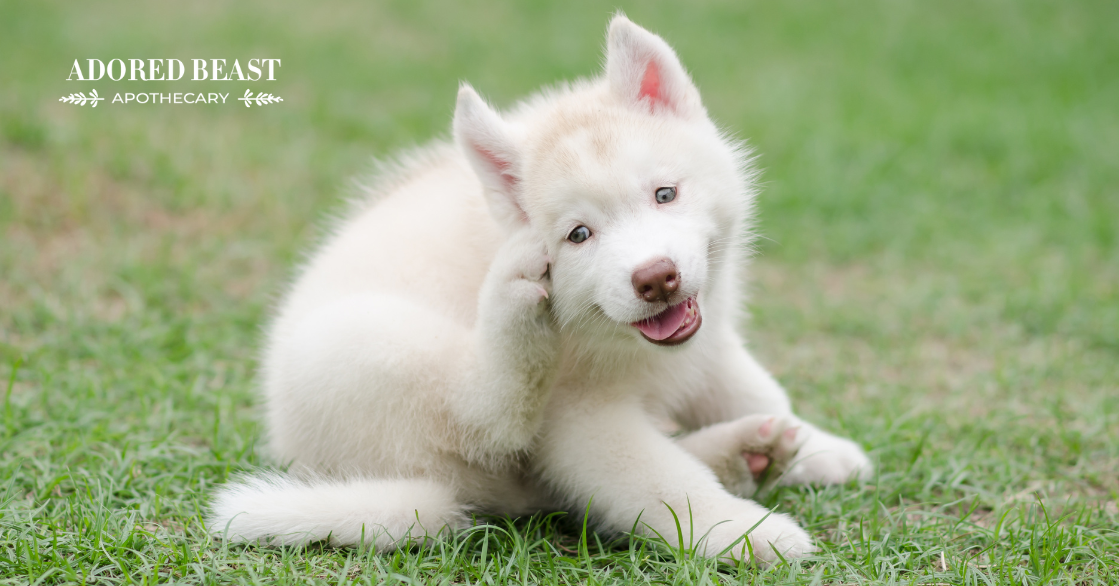
Scratching, head shaking, inflammation, gunk… these are often tell-tale signs of an ear infection. But, sometimes looks can be deceiving, and what you think is an ear infection could actually be something else…
Ear mites in dogs are a common but often misunderstood issue. While they’re tiny, these parasites can cause big discomfort, leading to itching, inflammation, and even secondary infections if left untreated. From a holistic perspective, addressing ear mites isn’t just about killing the mites themselves, but also about supporting your dog’s overall ear health, immune system, and internal balance.
Let’s break down what ear mites are, how to recognize them, and how to manage and prevent them naturally.
What are Ear Mites in Dogs?
Ear mites are microscopic parasites, most commonly Otodectes cynotis, that live in the ear canal and feed on ear wax, oils, and skin debris (yuck!). They are highly contagious and can spread quickly between dogs, cats, and other animals through close contact.
While ear mites are more common in puppies and dogs with frequent exposure to other animals (such as at dog parks, boarding facilities, or shelters), any dog can be affected, especially if their immune system is compromised.
From a holistic standpoint, ear mites often thrive when the body’s internal environment is out of balance. Healthy ears are naturally resistant to parasites, so recurring ear mite issues may point to deeper immune or gut health concerns.
Signs and Symptoms
Ear mite symptoms can look similar to other ear issues, such as yeast or bacterial infections, which is why proper identification is important. Common signs include:
- Intense ear itching and scratching
- Frequent head shaking
- Dark, crumbly debris in the ears (often described as looking like coffee grounds)
- Redness and inflammation inside the ear
- Ear sensitivity or pain when touched
- Hair loss or scabs around the ears from excessive scratching
- Unpleasant ear odor (usually from secondary infection)
These little pests won’t go away on their own, and once settled in, they can make a much bigger mess. If left untreated, ear mites can lead to chronic inflammation, damaged ear canals, or secondary bacterial or yeast overgrowth.
[RELATED] Ear mites and ear infections are not the same. Here’s how to deal with ear infections.
Natural Remedies for Ear Mites in Dogs
When addressing ear mites naturally, the goal is to gently remove debris, create an environment that’s inhospitable to mites, and support the body’s natural defenses – without harsh chemicals that can further irritate the ears.
1. Gentle Ear Cleaning (The Foundation)
Before using any remedy, the ears should be cleaned to remove debris and excess wax, which mites feed on.
How to Clean the Ears Naturally:
- Choose a pet-safe, natural ear cleanser with calming ingredients such as aloe vera, calendula, witch hazel (alcohol-free), or mullein.
- Gently lift the ear flap and apply the cleanser as directed.
- Massage the base of the ear for 20–30 seconds to loosen debris.
- Allow your dog to shake their head.
- Wipe away visible debris with a soft cotton pad or clean cloth.
✔ Clean once daily during active infestation, then reduce frequency as the ears improve.
✘ Avoid cotton swabs deep in the ear canal, which can push debris further in.
2. Oil-Based Support for Ear Mites
Oil-based remedies are a cornerstone of natural ear mite care. Oils help smother mites, loosen debris, and soothe inflamed skin.
1. Olive Oil or Mullein Oil
Why it helps:
These oils soften wax, suffocate mites, and calm irritation without being harsh on sensitive ear tissue.
How to Use:
- Warm the oil slightly by placing the bottle in warm (not hot) water.
- Using a clean dropper, place 2–5 drops into the affected ear (depending on ear size).
- Gently massage the base of the ear to distribute the oil.
- Allow your dog to shake their head.
- Wipe away excess oil and debris from the outer ear.
Frequency:
- Once daily for 7–10 days
- Continue for a few days after symptoms resolve to help disrupt the mite life cycle
2. Neem Oil (Properly Diluted)
Why it helps:
Neem has natural antiparasitic and antimicrobial properties that can support mite control.
Important: Neem oil must always be diluted for dogs.
How to Use:
- Mix 1–2 drops of neem oil into 1 tablespoon of a carrier oil (olive, coconut, or jojoba).
- Apply 2–3 drops of the diluted blend into the ear.
- Massage gently and allow your dog to shake.
- Wipe away visible residue.
Frequency:
- Once daily for up to 7 days
- Discontinue if irritation occurs
3. Garlic-Infused Oil (External Use Only)
Why it helps:
Garlic has long been used for its antimicrobial and antiparasitic support when applied externally in oil form.
How to Use:
- Use a pre-made garlic-infused oil formulated for pets (avoid homemade unless properly prepared).
- Apply a small amount to the outer ear canal – not deep inside.
- Massage gently and wipe excess.
Frequency:
- Once daily for 5–7 days
⚠️ Never use raw garlic directly in the ear.
3. Herbal Ear Support
Certain herbs can help calm inflammation and support healing during ear mite infestations.
Helpful Herbs:
- Calendula – soothes irritated skin
- Chamomile – calming and anti-inflammatory
- Mullein – traditionally used for ear health
These are often found in natural ear drops or can be used as a cooled herbal infusion for gentle cleaning.
How to Use an Herbal Rinse:
- Brew a weak tea using one herb or a blend.
- Let it cool completely.
- Use a small amount to gently wipe the outer ear or as a mild rinse before oil application.
4. Supporting the Body from the Inside
Ear mites often flourish when the immune system is under stress. Internal support can make a big difference, especially for dogs with recurring ear issues.
Holistic Internal Support:
- Probiotics to strengthen gut and immune health
- Omega-3 fatty acids to reduce inflammation and support skin integrity
- Whole-food, minimally processed diets that reduce inflammatory triggers
Supporting detox pathways, especially liver function, may also help dogs prone to chronic ear issues.
5. Consistency and Environment Matter
Natural remedies work best when used consistently and paired with environmental hygiene. Breaking the ear mite life cycle requires persistence, but gentle natural methods are often very effective when used correctly.
NOTE: If symptoms persist or worsen, your dog shows signs of pain or hearing loss, or there is swelling, bleeding, or discharge beyond ear wax, it’s a good idea to speak with your vet. As mentioned, mites can cause a bigger mess the longer they’re left to get comfortable…
Preventing Ear Mites Naturally
Prevention is just as important as treatment – especially if your dog has had ear mites before.
Maintain Healthy Ears
- Check ears weekly for redness, debris, or odour
- Keep ears clean and dry, especially after swimming or bathing
- Avoid harsh chemical cleaners that strip natural defenses
Support Internal Balance
- Feed a nutrient-dense diet
- Use probiotics and digestive support regularly
- Address food sensitivities that may contribute to chronic inflammation
Reduce Exposure
- Clean bedding, toys, and grooming tools regularly
- Treat all pets in the household if one has ear mites
- Be mindful after boarding, grooming, or exposure to unfamiliar animals
Strengthen Natural Defenses
A healthy immune system is one of the best defenses against parasites. Dogs with strong internal balance are far less appealing hosts for ear mites.
Ear mites in dogs are more than just a surface problem – they’re often a sign that the body needs extra support. By combining gentle ear care, natural remedies, immune support, and prevention strategies, you can help restore balance and keep your dog’s ears healthy, comfortable, and mite-free. Healthy ears start from the inside out.