As a pet parent, any time you find an abnormal growth on your animal’s body can be alarming. For most people, finding any lumps or bumps of any kind immediately brings to mind one condition (we doubt we even have to name it), even if there are lots of different types. Many of us have experienced that moment of panic – it’s the truth.
Finding strange, wart-like growths on your dog’s lips or in their mouth is no different. Fortunately, these growths are often caused by canine papilloma virus (CPV), a common viral infection that is usually harmless and temporary.
While canine papilloma virus can look concerning, most dogs recover on their own.
Knowing how the virus spreads, what to watch for, and how to support your dog’s immune system can help you navigate the condition with confidence – so that’s what we’re covering today!
What is Canine Papilloma Virus?
Canine papilloma virus is a contagious virus that causes benign (non-cancerous) warts, known as papillomas, on a dog’s skin and mucous membranes. The virus primarily affects young dogs under two years of age, as well as older dogs or dogs with weakened immune systems.
There are several different strains of canine papilloma virus, and each tends to affect different areas of the body. The most common form is oral papillomatosis, which produces warts around the lips, gums, tongue, roof of the mouth, and throat. Other strains may cause warts on the eyelids, feet, or skin.
The good news is that canine papilloma virus is species-specific, meaning it cannot be transmitted to humans or cats.
What Does it Look Like?
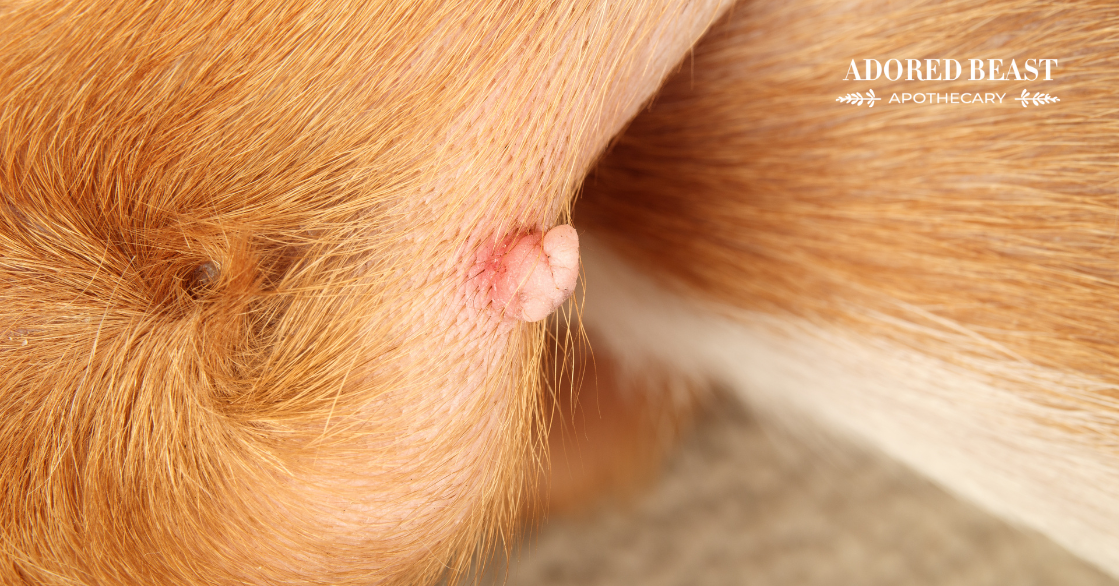
The hallmark sign of canine papilloma virus is the appearance of wart-like growths.
These growths are often:
- Small, round, and raised
- White, gray, or pink
- Rough or cauliflower-like in appearance
- Found around the mouth, lips, tongue, gums, or throat
- Occasionally found on the eyelids, paws, or skin
Depending on their location and size, dogs may also experience:
- Bad breath
- Excessive drooling
- Difficulty chewing
- Trouble swallowing
- Mild bleeding if a wart is injured
- Paw licking or limping (if warts develop on the feet)
Most dogs otherwise feel perfectly normal and continue eating, playing, and behaving as usual.
What Causes Canine Papilloma Virus?
Canine papilloma virus is caused by a virus that infects the outer layers of a dog’s skin or mucous membranes. It spreads through direct contact with an infected dog or by contact with contaminated objects such as:
- Food and water bowls
- Shared toys
- Kennels
- Grooming equipment
- Dog park surfaces
After exposure, the virus typically incubates for one to two months before warts become visible.
Not every dog exposed to the virus develops papillomas. A healthy immune system is often able to eliminate the virus before noticeable growths appear.
Dogs most at risk include:
- Puppies and young dogs
- Senior dogs
- Dogs recovering from illness
- Dogs taking immune-suppressing medications
- Dogs experiencing significant stress
Dogs with visible papillomas can spread the virus through close contact. Because the incubation period is several weeks, apparently healthy dogs may unknowingly spread the virus before warts appear. If your dog develops papillomas, it’s best to avoid:
- Dog parks
- Doggy daycare
- Boarding facilities
- Grooming appointments
- Shared water bowls
Until the warts have completely resolved.
Managing Canine Papilloma Virus
Since CPV is harmless (in most cases), it’s something you need to become coverly concerned about. Most cases require little to no treatment. As a dog’s immune system recognizes the virus, it gradually clears the infection. The warts usually shrink and disappear within one to five months, although some cases may take longer.
That said, natural supplements that help support the immune system are also a good choice (for CPV and for overall health and longevity). These can help with the healing process and discourage further growths.
1. Support the Gut Microbiome
The vast majority of the immune system lives in the gut, so you really want to do all you can to give it the attention it needs. And this isn’t just when managing CPV – it’s all the time. There’s never a wrong time to give the gut some love.
Probiotics are your go-to here. They’re going to help crowd out any harmful bacteria in the gut and create a healthy, robust environment that protects the immune system. Don’t forget the prebiotics – they’re going to allow those beneficial probiotic bacteria to thrive and do their work effectively.
Our choice: Fido’s Flora or The Wolf. Both feature species-appropriate probiotic strains that thrive in the gut. Fido’s Flora also contains fulvic and humic acid, which help clear toxins from the body (more on that next). The Wolf contains turkey tail mushrooms, which are known for their immune modulation and anti‑inflammatory effects.
2. Clean Out the Organs
Every day, our adored beasts encounter numerous environmental and chemical toxins. These can come from inside the home, out in the yard, in the car, and just the big, wide world in general. Over time, these toxins build up in the body.
The body can naturally handle some of this build-up. Portal organs like the liver and kidneys, the gut, and the skin do filter out some of the nasty substances. But, if your dog’s toxic load (the harmful chemicals that accumulate in the body) is too much to handle, these systems are not going to be able to perform at their optimal level – and that means they can’t handle pushing out viruses like CPV as well.
Because of this, gentle detoxification is important.
Our choice: Liver Tonic. You don’t want to be heavy-handed with the detox. Instead, our Liver Tonic combines several natural herbs that gently cleanse the body to support the portal organs, giving them a chance to shine!
3. Protect the Cells
Cells are the building blocks of the body. They’re everywhere, and everything passes through them – including viruses. Canine papillomavirus (CPV) primarily infects cells called keratinocytes, which are the main cells making up the outer layers of your dog’s skin and oral tissues. The virus takes over these skin cells and forces them to multiply uncontrollably.
Antioxidants are the best defense for the cells – and not just when CPV is on the table. They’re great in general for protecting all the cells, which is SUPER important all the time! Add some (or all) of these to your pet’s daily routine:
- Dark, leafy greens – Kale and spinach are chock-full of antioxidants. Other veggies like broccoli, beets, pumpkin, and artichokes are also great.
- Phytoplankton – Phytoplankton is often called the “king of antioxidants” because of its high levels of superoxide dismutase.
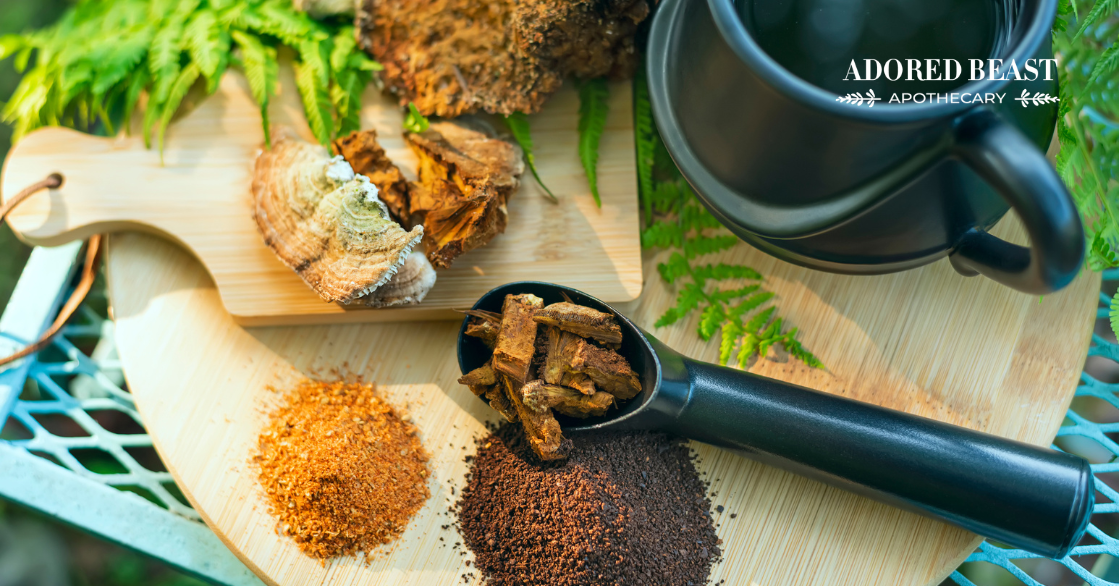
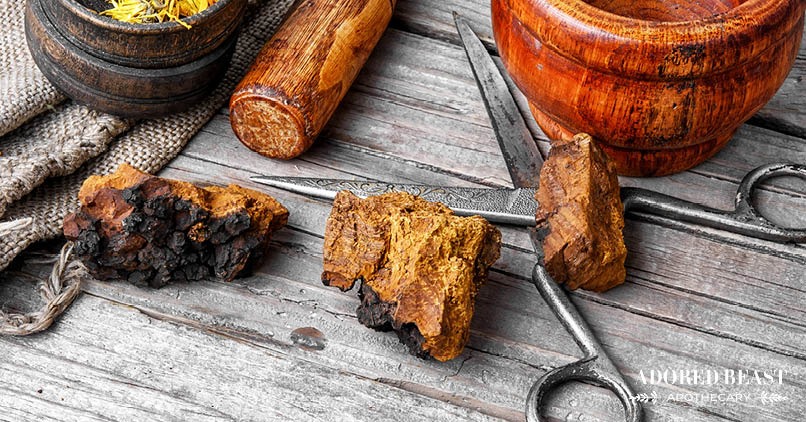
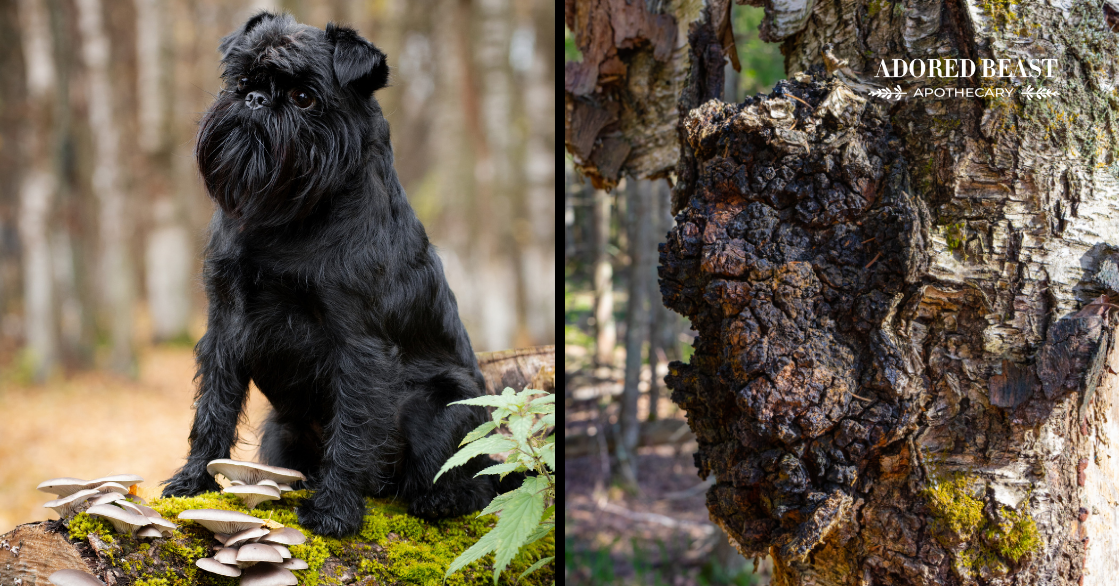
- Chaga mushrooms – Chaga mushrooms are another rich source of superoxide dismutase. In fact, they contain the highest levels of antioxidants after cocoa.
- Berries – Blueberries, blackberries, raspberries, and strawberries are some of the richest food sources of antioxidants.
Our choice: Vital Defense. A researched combindation of phytoplankton and chaga mushrooms, Vital Defense is an antioxidant powerhouse that supports normal cellular growth and repair, protects against cell damage caused by free radicals, and helps shield the cells from the harmful effects triggered by processed food, pollution, stress, pesticides, chemicals, second-hand smoke, medications, etc.
When to Talk to Your Vet
In most cases, a little TLC in the form of immune-supportive supplements is all your dog needs. However, there may be cases where veterinary intervention is recommended, including if the papillomas:
- Interfere with eating or drinking
- Become infected
- Bleed frequently
- Cause pain
- Persist for many months
- Continue spreading rapidly
Removing one wart does not necessarily eliminate the virus, so new papillomas may still develop until the immune system clears the infection.
NEVER attempt to remove or cut off papillomas yourself, as this can cause pain, bleeding, infection, and delayed healing.
Can Canine Papilloma Virus Be Prevented?
Because papilloma virus is widespread wherever dogs gather, complete prevention isn’t always possible. However, you can reduce the risk in a variety of ways.
There are several steps you can take to make you dog’s enviroment safer, especially if they’re prone to CPV:
- Avoiding contact with infected dogs, when possible
- Not sharing bowls or toys with unfamiliar dogs
- Cleaning food bowls and toys regularly
- Maintaining good hygiene at home
- Minimizing stress so as not to tax the immune system
- Incorporating immune supportive supplements into your dog’s routine (like those listed above)
Canine papilloma virus is one of the more common viral infections seen in young dogs. While the wart-like growths can look alarming, they’re usually benign and disappear as the immune system clears the virus.
The best approach is to monitor the papillomas, prevent the virus from spreading to other dogs, and support your dog’s overall health while their immune system does its job. If the warts become painful, infected, interfere with eating, or fail to resolve, your veterinarian can recommend appropriate treatment options. With a little patience, most dogs make a full recovery and develop immunity to the specific strain of papilloma virus that caused the infection.