The short version
Chaga (Inonotus obliquus) is a medicinal mushroom that grows on birch trees in cold northern forests. For dogs and cats, research points to five main benefits:
- May help fight cancer, by triggering cell death in tumour cells without harming healthy cells
- Regulates the immune system, calming it when it overreacts and supporting it when it lags
- Improves gut health by encouraging a healthy balance of gut bacteria
- Slows oxidative aging, as one of the most antioxidant-rich foods ever tested
- Supports organ health, especially the liver and healthy blood sugar
Is chaga safe? For most healthy dogs and cats, yes, when given as a properly prepared liquid extract. Avoid chaga in pets with kidney disease or a history of kidney or bladder stones, because it is naturally high in oxalates.
What is chaga?
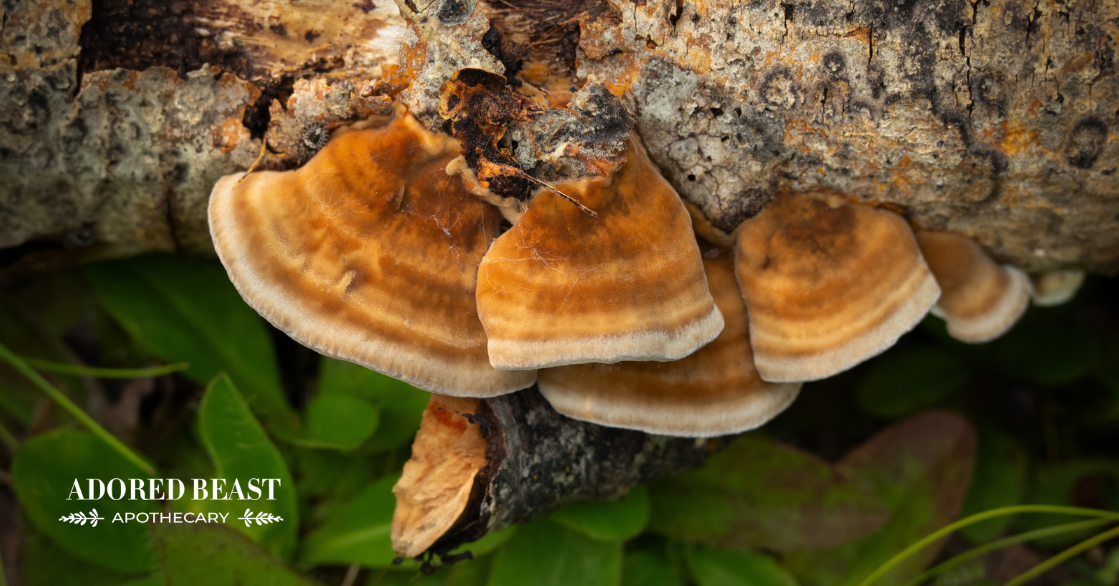
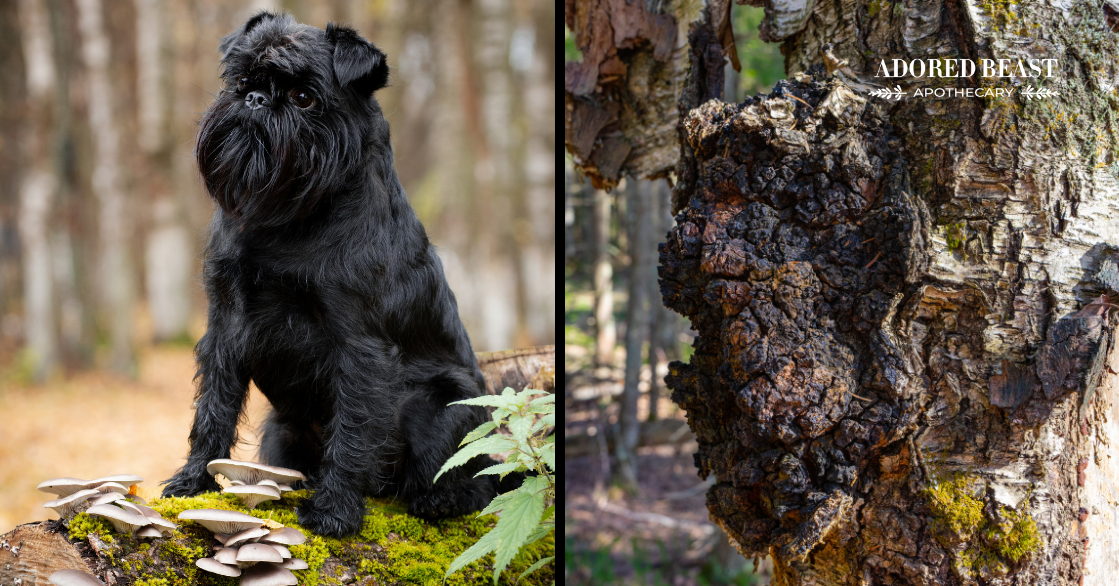
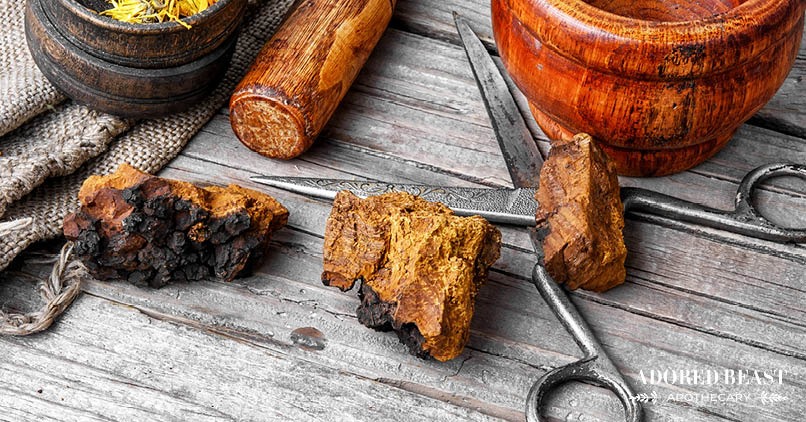
Chaga grows on birch trees in northern climates, including Canada, the northern United States, Northern and Eastern Europe, Russia and Korea. It does not look like a typical mushroom. It looks more like a lump of burnt charcoal on the side of the tree, with a rusty orange interior.
For hundreds of years chaga was a celebrated folk remedy in Siberia and Northern Europe. In recent years it has gained international attention for its benefits, for people and for our animals.
What nutrients are in chaga?
Chaga is packed with protective compounds:
- Antioxidants, including melanin
- Superoxide dismutase (SOD), an antioxidant enzyme
- Polyphenols
- Triterpenes
- Phytosterols
- Beta-D-glucans
It also contains fibre, B vitamins, vitamin D, and minerals including iron, magnesium, potassium, manganese and calcium.
What are the benefits of chaga for dogs and cats?
1. May help fight cancer
With cancer diagnoses rising in dogs and cats, this is arguably the most important benefit.
Research shows chaga has several anti-cancer abilities, including:
- Selective apoptosis: cell death in tumour cells, with no effect on healthy cells
- Slowing tumour cell growth
- Anti-mutagenic effects
Further studies suggest chaga may be a potential anti-cancer agent across a range of cancer types. Most of this research is laboratory based, so chaga is best used as support alongside your veterinarian’s care, not as a replacement.
2. Regulates the immune system
A healthy immune system reduces inflammation and responds to infection in a measured way. But with disease, arthritis or age, the immune system can start to overreact, sending immune cells where they cause harm. In that case, “boosting” immunity is the last thing the body needs.
Research shows chaga responds to the state of the body’s immune system, helping to support it when a boost is needed and calm it when it is overreacting. This is great news for dogs and cats with allergies or arthritis.
3. Improves gut health
We now know that most of the immune system lives in the gut. If the gut is not healthy, the rest of the body is vulnerable.
Chaga contains polysaccharides, a type of complex sugar. Research shows chaga’s polysaccharides induce positive changes in the gut microbiota, shifting it toward a healthier bacterial profile, and other studies found they help regulate gut bacteria overall.
4. Slows the aging process
No matter how carefully we feed our animals or how calm we keep their lives, they encounter free radicals every day. Free radicals drive oxidative stress, which accelerates aging, damages cells and tissues, and sits at the root of many chronic diseases, including cancer, diabetes, joint disease and heart disease.
Antioxidants neutralize free radicals, and chaga is among the richest antioxidant foods ever measured, thanks largely to its high melanin content. It helps protect cells from damage and supports healthy aging.
5. Supports organ health
Research on chaga and the liver suggests it may help slow the progression of certain liver problems and ease the inflammation and oxidative stress that fuel them.
Thanks to its polysaccharides (like beta-glucans), polyphenols and trace iodine, chaga can also help support healthy blood sugar levels, which in turn supports pancreatic function.
Is chaga safe for dogs and cats?
For most healthy dogs and cats, yes. Chaga is gentle and meant for long-term use. There are a few important cautions:
- Kidney disease or stones. Chaga is naturally high in oxalates, which can contribute to calcium oxalate stones. If your dog or cat has kidney disease or a history of kidney or bladder stones, choose turkey tail instead. Read: Oxalates, Chaga, and Kidney Issues
- Medications. Because chaga can affect blood sugar and blood clotting, talk to your veterinarian first if your pet is diabetic or on blood thinners.
- Raw chaga. Never give raw, unprocessed chaga. It is hard to digest, and the body cannot access its benefits without proper extraction.
How do you choose a chaga supplement for your dog or cat?
Look at how it is harvested
For chaga to reach its full potential, it needs a long growth life. It should be harvested in a way that does not dig into the inner part of the tree (the xylem or pith), so the chaga keeps growing for as long as the tree lives.
Unfortunately, much of the chaga on the market is not harvested this way. Because it is often sold by the pound, some harvesters cut it off with chainsaws, which can leave machine oil behind and kill the tree. Look for chaga that is sustainably and ethically harvested.
Choose a liquid extract over a powder
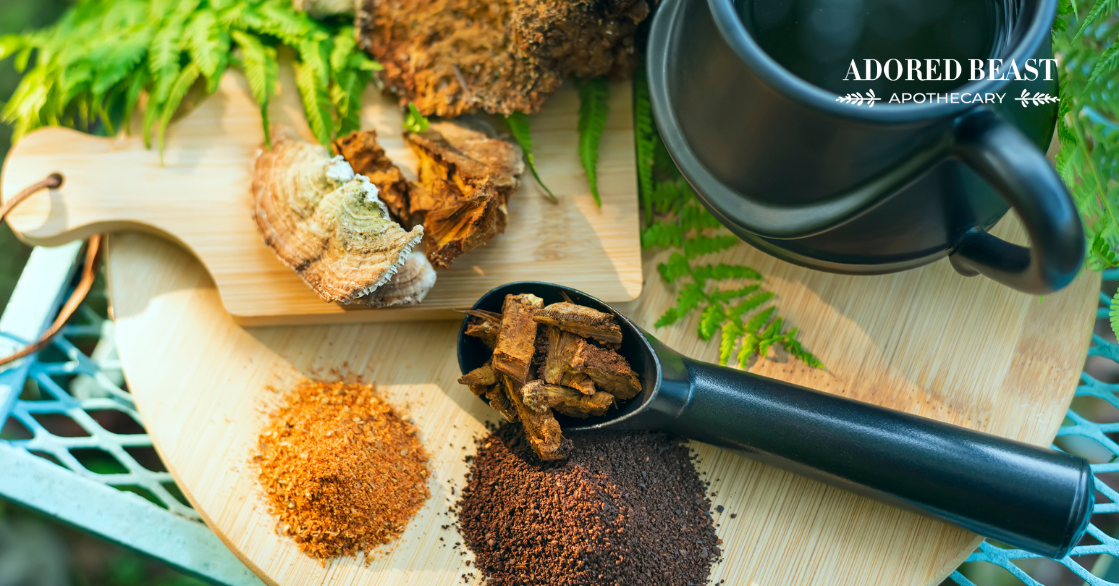
Dried chaga powder is not easily absorbed. To get the medicinal benefits, chaga has to be extracted in hot water, alcohol, or both. A triple (or at least dual) liquid extract draws out the full spectrum of compounds: water-soluble ones like polysaccharides and alcohol-soluble ones like antioxidants and triterpenes.
Ask about oxalate testing
A responsible company will test its chaga for oxalate content.
Our Chaga Liquid Extract is sustainably harvested from North American forests using age-old methods that protect the health of the trees. Our mushroom extracts are made with a three-step triple extraction: first hot water (to draw out the beta-glucans and other polysaccharides), then organic alcohol (the only way to extract the triterpenes), then glycerin. Once the process is complete, there is 0% alcohol left, and every batch is tested to confirm it. Chaga is also one of the three ingredients in Vital Defense, our cellular support formula, alongside phytoplankton and spirulina.
Should you rotate chaga with other mushrooms?
Yes. Chaga is wonderful, but no single mushroom does everything. Turkey tail brings immune-modulating compounds that chaga does not have. We recommend rotating the two month to month. Read Chaga vs Turkey Tail: Is One Better Than the Other? and Medicinal Mushrooms for Dogs: The Power of Rotation.
Have a horse? Chaga supports them too: Chaga for Horses: The Mighty Mushroom.
The bottom line
Chaga offers dogs and cats an impressive list of benefits: cancer support, immune balance, a healthier gut, antioxidant protection and organ support. Choose an ethically harvested liquid extract, skip it for pets with kidney or stone concerns, and rotate it with turkey tail for the widest range of support.
Frequently asked questions
Chaga supports immune balance, gut health and antioxidant protection, and research suggests it has anti-cancer properties. It is also an adaptogen that helps the body cope with stress.
Yes, for most cats. Avoid it in cats with kidney disease, bladder stones or urinary issues because chaga is high in oxalates.
Lab research shows chaga can trigger cell death in tumour cells without harming healthy cells. Use it as support alongside your veterinarian’s treatment plan, not as a replacement.
Chaga helps regulate an overactive immune response, which may help dogs with allergies. Turkey tail is also helpful for allergic dogs prone to skin infections.
Liquid extract. Dried chaga powder is poorly absorbed; a triple extract (hot water, alcohol, then glycerin) draws out the full range of beneficial compounds.
Pets with kidney disease, a history of kidney or bladder stones, or urinary tract issues. Check with your vet first if your pet is diabetic or on blood thinners.
Written by The Adored Beast Team at [Adored Beast Apothecary], founded by Julie Anne Lee, DCH, RCSHom, one of the longest-practicing holistic animal health practitioners in North America. [Read Julie’s full bio]
This article is for informational purposes and is not a substitute for veterinary advice. If you are worried about your animal, please contact your veterinarian.