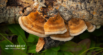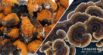
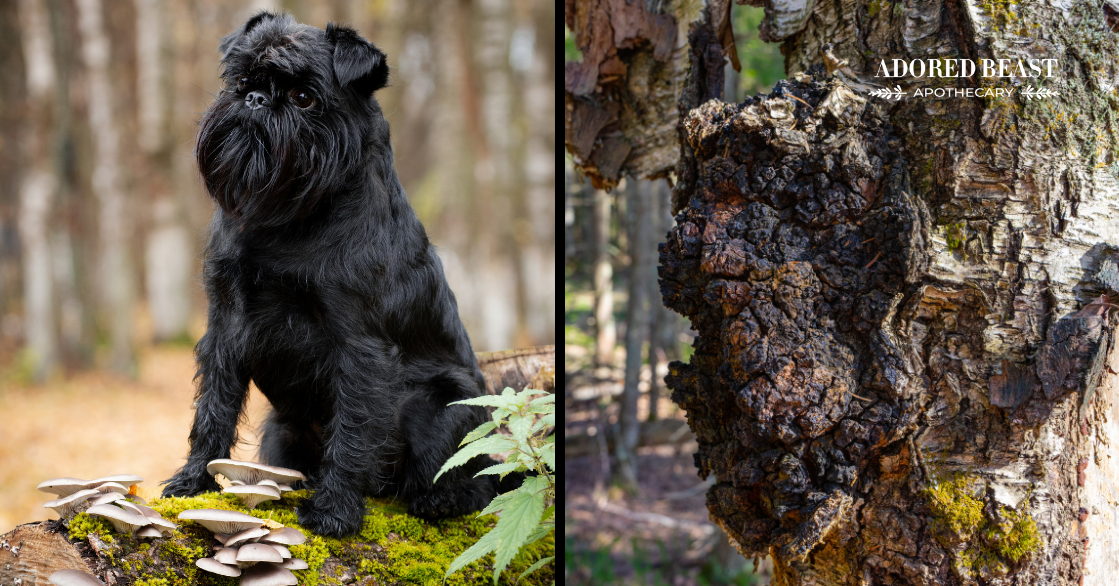
Discover the benefits of medicinal mushrooms for dogs and why rotation matters. Learn how Chaga and Turkey Tail mushrooms offer different properties that may support immune health, stress response, and overall wellness. Explore why incorporating a variety of medicinal mushrooms into your dog’s routine can help provide diverse nutritional benefits.
The short version
- Medicinal mushrooms like turkey tail and chaga are rich in beta-glucans, antioxidants, polyphenols, triterpenes and prebiotics. Together they support the immune system, the gut, and the body’s defence against oxidative stress.
- Each mushroom does something different. Turkey tail leads for immune modulation. Chaga leads for antioxidants and stress support.
- Rotating mushrooms (for example, one month of turkey tail, then one month of chaga) gives your dog the benefits of both and keeps the body responsive.
- Quality matters. Choose a liquid extract made from wild or ethically harvested mushrooms.
- Skip chaga for dogs with kidney disease or a history of stones. Use turkey tail instead.
The Benefits of Medicinal Mushrooms for Have mushrooms always been used as medicine?
Yes, for thousands of years:
- In 1991, hikers found a man frozen in the Alpine ice who lived around 3300 BCE, often called Ötzi. He was carrying two species of mushroom: one for starting fires, and one believed to fight parasites and infection.
- In ancient Egypt, mushrooms were reserved for royalty and depicted as plants of immortality.
- Chinese medical texts from as early as 100 BCE describe mushrooms as treatments for many illnesses.
- Greek and Roman healers wrote about them too.
And of course, in 1928, Alexander Fleming discovered penicillin, which comes from a mould, another member of the fungi kingdom. We may not be pharaohs, but we have long celebrated what mushrooms can offer our adored beasts.
What are the benefits of medicinal mushrooms for dogs?
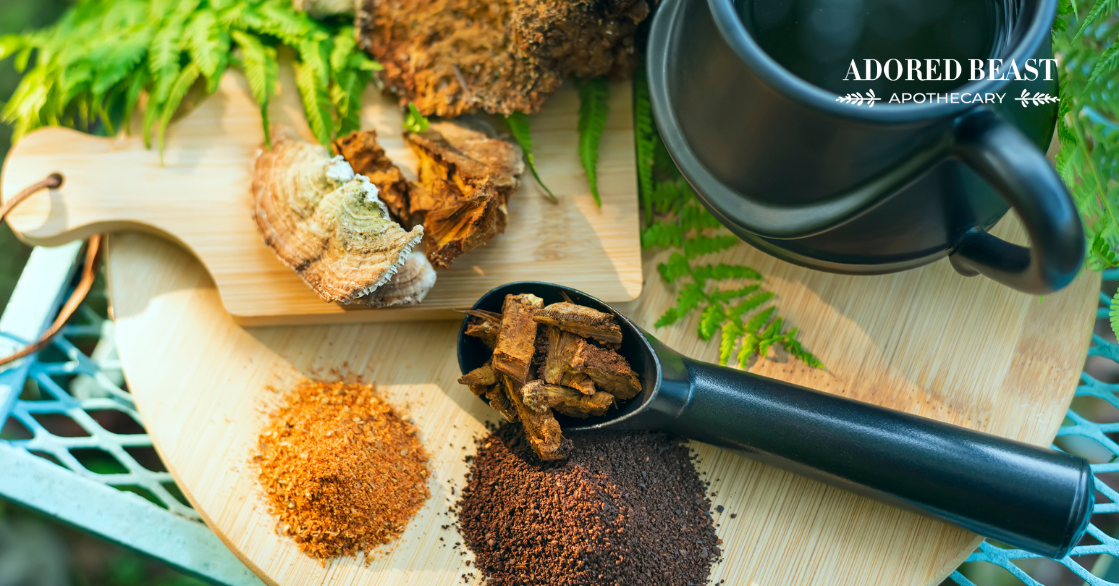
Medicinal mushrooms are rich in:
- Beta-glucans, which help regulate the immune system
- Antioxidants and polyphenols, which fight free radicals and oxidative stress
- Triterpenes, which support a healthy inflammatory response
- Prebiotics, which feed the beneficial bacteria in the gut
Together, they form a powerhouse team. But each mushroom brings its own signature. Chaga and turkey tail are the perfect example.
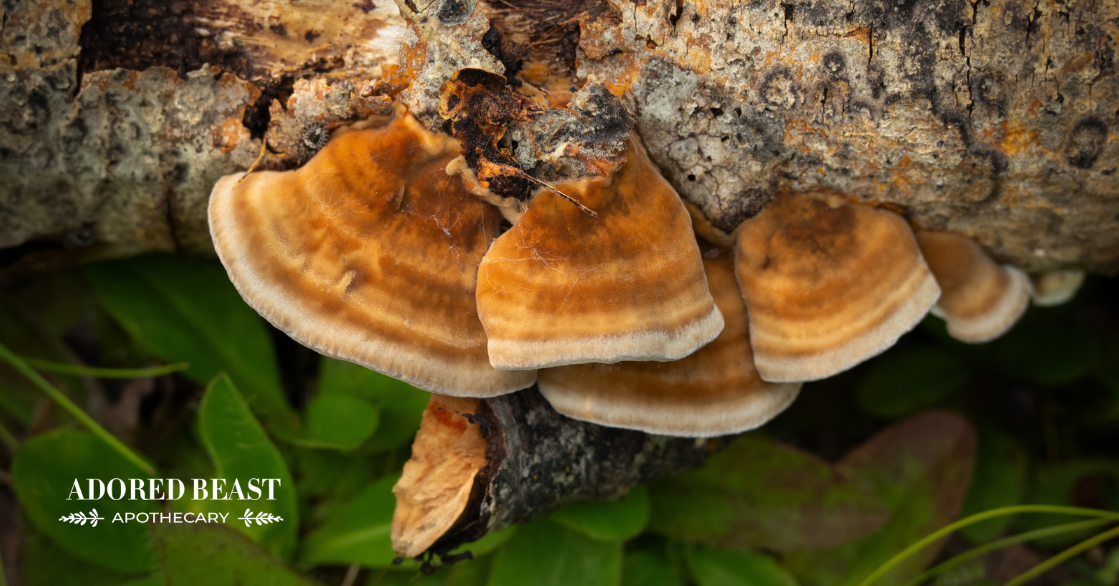
What does turkey tail do for dogs?
Turkey tail contains two compounds that make it stand out for immune health:
- PSP (polysaccharide peptide) increases monocytes, white blood cells that help fight infection.
- PSK (polysaccharide-K) helps regulate the immune response and activates specialized white blood cells that protect the body against harmful bacteria.
PSP is also the compound studied by Penn Vet in dogs with hemangiosarcoma, which is why turkey tail comes up so often in canine cancer care.
Turkey tail may also help reduce Staphylococcus bacteria, the cause of most staph skin infections. Many allergic dogs are given antibiotics not for the allergy but for this secondary infection, so turkey tail can be a gentle ally for itchy, allergy-prone dogs.
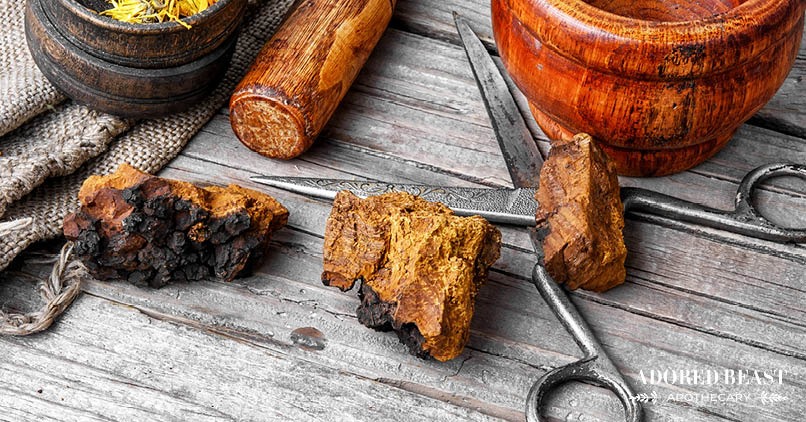
What does chaga do for dogs?
Chaga is among the most antioxidant-rich foods ever tested. But what we love most about it is that it is an [adaptogen](https://blog.adoredbeast.com/the-best-adaptogens-for-dogs-and-cats-natural-support-for-stress-immunity-overall-health/). It helps the body resist stress by supporting the adrenal glands, which control the release of stress hormones.
That matters because so many conditions are linked to chronic stress, including Cushing’s disease, inflammatory bowel disease, Addison’s disease, diabetes, high blood pressure and anxiety. Stress hormones also take a toll on the heart, gut and brain, so bringing them back into balance supports all three.
Adaptogens also help with blood sugar regulation, a healthy inflammatory response, metabolism, and memory, which is especially helpful for our senior dogs.
Not sure which to start with? Read Chaga vs Turkey Tail: Is One Better Than the Other?
Why rotate medicinal mushrooms?
People ask us all the time which mushroom to use. Our answer is almost always: both, in rotation.
When it comes to health, diversity is key. Think about fruit. Apples, blueberries and oranges all contain antioxidants, but you would never want to eat just one for the rest of your life. Eating a variety gives the body the whole spectrum of nutrients, and the more diversity in the diet, the more protection the body has.
Supplements are no different. Rotating mushrooms:
- Gives the body a wider set of tools. Turkey tail modulates the immune system; chaga targets stress. Rotating means your dog gets both.
- Keeps the body responsive. Instead of getting used to one thing, the body keeps adapting.
- Lets the body fully take in one mushroom before offering something new. This is why we prefer single-mushroom extracts over blends.
It is the same principle as rotating proteins in your dog’s food or rotating probiotics for gut health.
How do you rotate mushrooms for your dog?
Here is a simple schedule:
| Month | Mushroom | Focus |
| 1 | Turkey Tail Liquid Extract | Immune modulation, gut, skin |
| 2 | Chaga Liquid Extract | Antioxidants, stress, healthy aging |
| 3 | Back to turkey tail | Repeat |
A few tips:
- Mushrooms work best long term. Think months and years, not days.
- Follow the dosing on the product label for your dog’s weight.
- If your dog has kidney disease or a history of kidney or bladder stones, stay with turkey tail and skip chaga. Chaga is naturally high in oxalates. Read more: Oxalates, Chaga, and Kidney Issues
- Rotation works at every life stage: young dogs, healthy adults and seniors.
Are medicinal mushroom supplements safe for dogs?
Properly prepared medicinal mushroom extracts are generally very safe for dogs and are meant to be used long term. The exceptions:
- Chaga is not recommended for dogs with kidney disease or a history of stones.
- Wild mushrooms from the yard or trail are a different story. Some are deadly. Read Can Dogs Eat Mushrooms? A Quick Guide to Fungi.
- If your dog is on medication or in cancer treatment, check in with your veterinarian first.
How do you choose a good mushroom supplement for your dog?
- Look for the mushroom itself, not mycelium grown on grain. Many products are mostly starch from the grain they were grown on. Read Does it Really Matter How Mushrooms for Pets are Grown?
- Choose a triple (or at least dual) liquid extract. Extraction in hot water and alcohol draws out both water-soluble polysaccharides and alcohol-soluble triterpenes, which dried powders often lack. Our mushroom extracts are made with a three-step triple extraction: first hot water (to draw out the beta-glucans and other polysaccharides), then organic alcohol (the only way to extract the triterpenes), then glycerin. Once the process is complete, there is 0% alcohol left, and every batch is tested to confirm it.
- Look for ethical, sustainable harvesting. It is better for the forest and for the quality of the mushroom.
The bottom line
Medicinal mushrooms are some of the most valuable, and safest, tools we have for supporting our dogs’ immune systems, guts and resilience. For healthy dogs, young dogs and seniors alike, the answer is not choosing one mushroom. It is rotation, rotation, rotation.
Frequently asked questions
Turkey tail and chaga are two of the best-studied. Turkey tail supports immune modulation and gut health; chaga supports antioxidant protection and stress resilience.
Each mushroom supports the body differently. Rotating, for example monthly, gives your dog a broader range of benefits and keeps the body responsive rather than used to a single supplement.
Both are meant for long-term use. Many pet parents rotate them month to month indefinitely.
Yes. Turkey tail supports immune function, and chaga’s antioxidant and adaptogenic properties support healthy aging and cognition. Skip chaga if your senior dog has kidney disease.
We prefer single-mushroom extracts in rotation. This lets the body take in everything one mushroom offers before moving to the next.
Written by The Adored Beast Team at [Adored Beast Apothecary], founded by Julie Anne Lee, DCH, RCSHom, one of the longest-practicing holistic animal health practitioners in North America. [Read Julie’s full bio]
This article is for informational purposes and is not a substitute for veterinary advice. If you are worried about your dog, please contact your veterinarian.