The short answer
- Chaga is naturally high in oxalates, compounds that can contribute to calcium oxalate stones in the kidneys and bladder.
- If your dog or cat has kidney disease, a history of kidney or bladder stones, or urinary tract issues, skip chaga. This includes products that contain chaga as an ingredient.
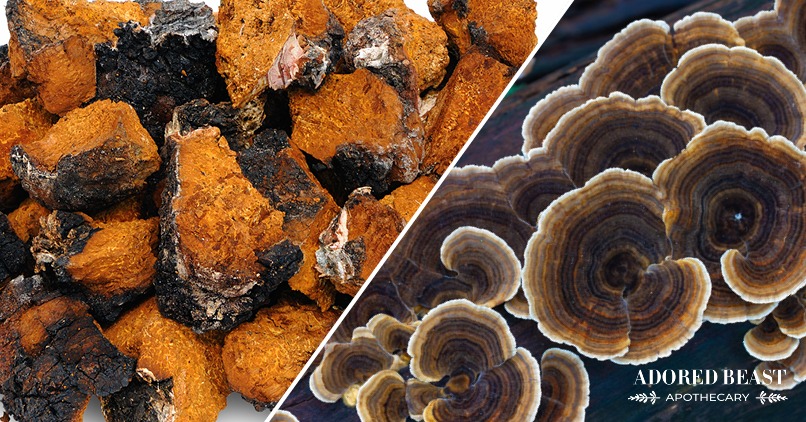
- Choose turkey tail instead. It offers immune and antioxidant support and is lower in oxalates.
- For healthy pets, a properly prepared, oxalate-tested chaga extract is a valuable antioxidant and can be part of a mushroom rotation.
What are oxalates?
Oxalates (oxalic acid) are natural compounds found in many plant foods, including spinach, beet greens, rhubarb, almonds, sweet potatoes, and chaga mushrooms.
They are sometimes called anti-nutrients because they bind to minerals like calcium and magnesium in the digestive tract, forming crystals the body cannot absorb. This can reduce how much of those minerals the body gets and, in some animals, contribute to calcium oxalate stones.
Which dogs and cats are at risk of oxalate stones?
Calcium oxalate stones are more common in dogs than cats, and some breeds are more prone:
- Dogs: Miniature Schnauzers, Lhasa Apsos, Yorkshire Terriers, Bichon Frises and Shih Tzus
- Cats: Burmese, Persian and Himalayan cats may be at higher risk
What are the signs of oxalate stones in pets?
- Frequent urination
- Blood in the urine
- Straining to urinate
- Discomfort or pain
- Excessive licking of the urinary area
If your pet is straining to urinate and producing little or no urine, contact your veterinarian right away. Stones can cause a urinary blockage, which is a medical emergency.
Want to know more about kidney health? Read Kidney Disease in Dogs and Cats.
Should you give your pet chaga?
Chaga is valued in holistic pet health for its antioxidant and immune-supporting properties. It is among the most antioxidant-rich foods ever tested, which is why we love it for fighting free radicals and oxidative stress. Read more in The Benefits of Chaga Mushrooms for Dogs and Cats.
But its oxalate content makes it the wrong choice for some animals. We do not recommend chaga for pets with:
- A history of kidney or bladder stones
- Chronic kidney disease (CKD)
- Urinary tract issues
How much oxalate is in Adored Beast chaga?
We know this is a concern, so we test our chaga products for oxalate content. While some chaga supplements on the market have measured as high as 100 mg/g, ours tested low:
| Product | Oxalate content (tested) |
| Chaga Liquid Extract | 1.39 mg per ml |
| Vital Defense (contains chaga) | 6 to 12 mg/g |
| Some chaga supplements on the market | Up to 100 mg/g |
Even at these low levels, we still don’t recommend chaga, or Vital Defense, for animals with kidney issues. It is just not worth adding to the risk. As our founder Julie Anne Lee always says, above all, do no harm.
What mushroom is safe for dogs and cats with kidney issues?
If you want immune or antioxidant support for a pet with kidney or stone concerns, consider:
- Turkey Tail: excellent immune support, lower in oxalates than chaga. Read The Benefits of Turkey Tail Mushrooms for Dogs & Cats.
- Reishi: supports a healthy inflammatory response and is traditionally used for kidney support.
- Cordyceps: traditionally used to support respiratory and kidney function.
- Marine phytoplankton, a powerful antioxidant that is not a mushroom at all, like Phyto Synergy.
Not sure how the two mushrooms compare? Read Chaga vs Turkey Tail: Is One Better Than the Other?
Can healthy pets take chaga?
Yes. For healthy dogs and cats without kidney or urinary concerns, a properly prepared chaga extract can be very valuable. We recommend rotating it with turkey tail. See Medicinal Mushrooms for Dogs: The Power of Rotation.
If you want to be extra careful with a healthy pet, a few habits help reduce oxalate absorption:
- Pair with calcium. Calcium-rich foods eaten alongside higher-oxalate foods help bind oxalates in the gut, before they reach the kidneys.
- Cook certain vegetables. Boiling reduces oxalates in foods like spinach and sweet potatoes.
- Keep them hydrated. Water helps flush out excess oxalates. Keep the bowl full, and add water to dry food.
The bottom line
Should you be worried about oxalates in chaga? If your pet has kidney disease, stones or urinary issues, yes. Skip chaga and choose turkey tail, another mushroom, or an antioxidant like phytoplankton instead. For healthy pets, a low-oxalate, tested chaga extract remains one of nature’s most powerful antioxidants. Safety first, always.
Frequently asked questions
No. Chaga is naturally high in oxalates, which can contribute to calcium oxalate stones. We recommend turkey tail instead for dogs with kidney disease.
Chaga’s high oxalate content can contribute to calcium oxalate stones in animals that are prone to them. Healthy animals without a stone history are at much lower risk.
Turkey tail is a good choice. It supports the immune system and is lower in oxalates than chaga. Reishi and cordyceps are also traditionally used for kidney support.
Our Chaga Liquid Extract tested at 1.39 mg per ml, and Vital Defense tested at 6 to 12 mg/g. Some chaga supplements have tested as high as 100 mg/g.
Miniature Schnauzers, Lhasa Apsos, Yorkshire Terriers, Bichon Frises and Shih Tzus. In cats, Burmese, Persian and Himalayan breeds may be at higher risk.
No. Cats with a history of bladder stones or urinary issues should avoid chaga. Turkey tail is a safer alternative.
Written by The Adored Beast Team at [Adored Beast Apothecary], founded by Julie Anne Lee, DCH, RCSHom, one of the longest-practicing holistic animal health practitioners in North America. [Read Julie’s full bio]
This article is for informational purposes and is not a substitute for veterinary advice. If you are worried about your animal, please contact your veterinarian.