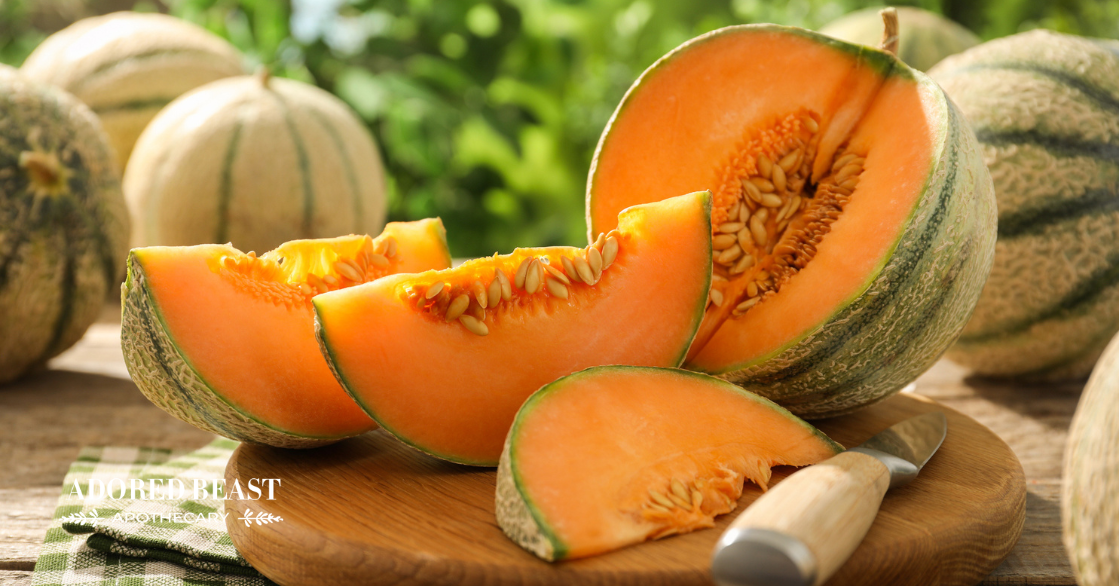
If you’ve ever sliced into a juicy cantaloupe and caught your dog eyeing it eagerly, you might be wondering, can dogs eat cantaloupe? The short answer is yes – dogs can safely enjoy cantaloupe in moderation, and it even comes with some great health benefits.
In this guide, we’ll break down why cantaloupe is good for dogs, how to serve it safely, other healthy melon options, and even a simple, dog-friendly recipe your pup will love.
Can Dogs Eat Cantaloupe?
Yes, cantaloupe is non-toxic and safe for dogs when served properly. It’s a refreshing, naturally sweet fruit that many dogs enjoy – especially on warm days.
Cantaloupe isn’t just tasty – it’s packed with nutrients that can support your dog’s health:
1. Hydration Boost
Cantaloupe is about 90% water, making it a great snack to help keep your dog hydrated, especially in hot weather.
2. Rich in Vitamins
It contains:
- Vitamin A – supports eye health and immune function
- Vitamin C – helps reduce inflammation and supports the immune system
3. High in Fibre
Fibre aids digestion and can help regulate bowel movements.
4. Low in Calories
Compared to many commercial treats, cantaloupe is relatively low in calories, making it a healthier alternative.
Other Healthy Melons for Dogs
Cantaloupe isn’t the only melon your dog can enjoy. Here are a few other safe and healthy options:
Watermelon
- Benefits: Extremely hydrating and rich in vitamins A, B6, and C
- Why it’s great: Perfect for cooling down in summer
- Note: Always remove seeds and rind
Honeydew Melon
- Benefits: High in vitamin C and potassium
- Why it’s great: Supports immune health and muscle function
Galia Melon
- Benefits: Contains antioxidants and essential vitamins
- Why it’s great: A sweet, nutrient-dense option for variety
All of these melons are safe when served plain, seedless, and rind-free.
[RELATED] The 8 Best Fruits for Dogs (+ Honourable Mentions)
How to Feed Cantaloupe to Your Dog
To safely serve cantaloupe:
- Remove the rind – The tough outer skin is difficult to digest and can cause blockages
- Take out the seeds – Seeds can be a choking hazard
- Cut into small pieces – Bite-sized chunks are safest
- Serve in moderation – Due to natural sugars, limit portions (especially for overweight or diabetic dogs)
Suggested Serving Size
- Small dogs: 1–2 small cubes
- Medium dogs: 3–4 cubes
- Large dogs: A small handful
Recipe: Cantaloupe Kefir Frozen Bites
Here’s a simple and nutritious treat your dog will love. The cantaloupe provides hydration and vitamins, the kefir delivers valuable probiotics for gut health, and the berries give a boost of antioxidants and fibre!
Ingredients:
- 1 cup fresh cantaloupe (cubed, seedless, rind removed)
- ½ cup plain kefir (unsweetened, no added flavours)
- ¼ cup blueberries
- ¼ cup strawberries
Instructions:
- Add all ingredients to a blender
- Blend until smooth
- Pour into silicone moulds or an ice cube tray
- Freeze for 3–4 hours (or until solid)
- Serve as a refreshing treat
So, can dogs eat cantaloupe? Absolutely! It’s a nutritious, hydrating, and delicious treat when served properly. Along with other melons like watermelon and honeydew, it can be a great addition to your dog’s snack rotation. Enjoy sharing this sweet, healthy treat with your furry friend!