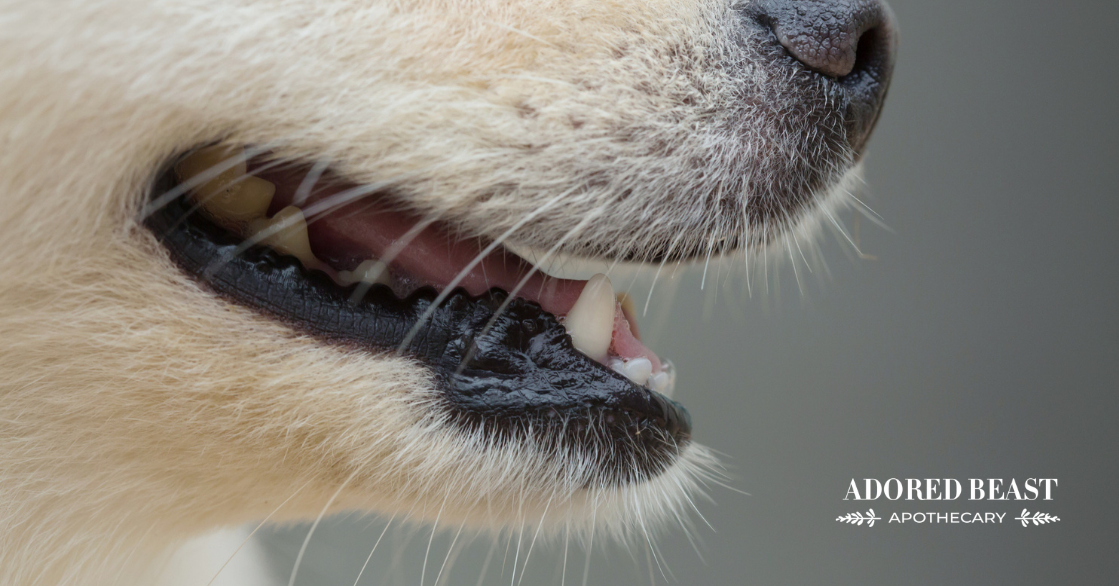
If you’ve ever gotten up close and personal with your dog’s face (and we know you have), you’ve probably noticed those stiff, wiry hairs sticking out around their muzzle, above their eyes, and beneath their chin. They may look like oversized facial hairs – but dog whiskers are much more than decoration!
So, why do dogs have whiskers? These special hairs, technically called vibrissae, are highly sensitive sensory tools that help dogs understand and navigate the world around them. They can detect changes in air movement, help dogs sense nearby objects, and even protect their eyes.
In other words, your dog’s whiskers are doing some pretty impressive work! Let’s find out more…
What Are Dog Whiskers?
Whiskers are specialized hairs that are different from the ordinary fur covering most of your dog’s body. They’re thicker, stiffer, and deeply rooted in the skin.
The roots of whiskers are surrounded by highly sensitive nerve endings and blood vessels. When a whisker moves or is touched, those nerves send information to the brain.
This makes whiskers something like tiny sensory antennae.
Unlike their regular fur, which primarily provides warmth and protection, whiskers help dogs gather information about their surroundings.
And they’re not only found on the muzzle. Depending on the dog, you may find whiskers:
- On either side of their nose and muzzle
- Above their eyes
- On their cheeks
- Under their chin
- Around their lips
You may even notice that some whiskers are surprisingly long. That’s because their length and positioning help them detect things beyond the immediate surface of the face.
So, Why Do Dogs Have Whiskers?
Dogs use their whiskers for several important purposes.
1. Whiskers Help Dogs Navigate Their Environment
Dogs don’t rely on their eyes alone to understand the world. Their whiskers provide additional sensory information about what’s happening close to their face.
When a dog approaches an object, changes in air currents around the whiskers can provide information about its location. The whiskers can also come into contact with nearby surfaces, giving the dog another way to detect what’s around them.
This can be particularly helpful when a dog is exploring a tight or unfamiliar space.
Think of whiskers as a built-in proximity detection system!
2. They Help Dogs Detect Nearby Objects
Have you ever watched your dog investigate something with their nose practically touching it?
Their whiskers are helping with that investigation.
Because whiskers are so sensitive, they can detect contact with objects close to the face. This provides information about the size, shape, position, and proximity of things in their environment.
For a dog, this can be especially useful when their nose is buried in grass, sniffing around furniture, or investigating something in a dark or cramped area.
3. Whiskers Can Help Protect the Eyes
Those whiskers above your dog’s eyes aren’t there by accident.
The whiskers located above the eyes can act as an early-warning system when something gets too close. If an object or even a small piece of debris comes near them, stimulation of these whiskers can trigger a protective response such as blinking or moving the head.
It’s another clever way your dog’s body helps protect those precious eyes.
4. They Help Dogs Sense Changes in Air Movement
Whiskers can pick up subtle changes in air currents.
This may give dogs additional information about objects nearby – even when they can’t easily see them.
It’s one reason whiskers can be particularly useful in low-light environments. While dogs can see better than humans in dim conditions, their whiskers provide another sensory input that doesn’t depend on vision.
5. Whiskers May Help Dogs Communicate
Whiskers aren’t just sensory organs – they can also contribute to canine body language.
When a dog is interested or alert, you may notice their facial features change, including the position of their whiskers. When they’re relaxed, their whiskers may sit naturally against the face.
Whisker position isn’t a standalone way to determine how a dog is feeling, though. Always consider the entire picture – including their ears, eyes, tail, posture, and overall behaviour.
Do All Dogs Have Them?
Yes! All dogs have whiskers, although their appearance varies considerably from one dog to another.
A long-haired dog may have whiskers that blend into their facial hair, while on a short-haired dog they may be much more obvious.
Some breeds also have facial hair that makes their whiskers difficult to see. A Schnauzer, for example, may have a wonderfully impressive beard that makes it challenging to distinguish individual whiskers!
Regardless of breed, though, those specialized sensory hairs are there doing their job.
Are Dog Whiskers the Same as Cat Whiskers?
They’re similar, but there are some differences.
Both dogs and cats have vibrissae that function as highly sensitive sensory hairs. Cats, however, tend to have much more prominent whiskers, and their whiskers play a particularly important role in navigating their environment and judging whether they can fit through spaces.
Dogs rely heavily on their noses and other senses, too, but their whiskers still provide valuable information about what’s happening around their faces.
So while your dog’s whiskers may not be quite as dramatic as a cat’s, they’re still an important piece of their sensory toolkit.
[RELATED] Want to know more about cat whiskers? Read this next!
Can You Trim a Dog’s Whiskers?
Nope. Leave your dog’s whiskers alone. Trimming a whisker doesn’t hurt in the same way cutting the hair shaft itself would – but removing or shortening these sensory hairs can temporarily reduce some of the sensory information your dog receives through them.
The whisker itself doesn’t contain pain nerves along its shaft, which is why a whisker can naturally fall out without causing pain. However, the follicle where it grows is highly innervated and sensitive.
For that reason, never pluck or pull out a dog’s whiskers.
If your dog’s whiskers are accidentally trimmed during grooming, don’t panic. They will typically grow back over time. In the meantime, your dog may simply have slightly less sensory information from those particular whiskers.
Unless a veterinarian recommends otherwise for a medical reason, there’s usually no need to trim them.
Should You Be Concerned If Your Dog Loses a Lot of Whiskers?
Finding an occasional whisker is nothing to worry about. Dogs naturally lose and replace them. You may occasionally find one of your dog’s whiskers on their bedding, the floor, or stuck to your clothing. That’s completely normal. I have found many of these long, brittle (and sharp) hairs stuck in my pants (and into my legs) over the years…
However, if you notice sudden or excessive hair loss around your dog’s face, especially along with redness, itching, crusting, sores, inflammation, or other changes to the skin, it’s worth talking with your veterinarian.
Changes affecting the skin or hair around the muzzle can have many possible causes, so your veterinarian can help determine what’s going on.
Will they grow back? Yes! Like other hairs, whiskers naturally shed and regrow. If a whisker falls out naturally, the follicle can produce a new one.
Just don’t pull whiskers out intentionally. The follicles are packed with nerves and are extremely sensitive. Ouch!
So, why do dogs have whiskers?
Because they’re useful!
Those funny little hairs help dogs gather information about the world around them. They can detect nearby objects and changes in air movement, help protect the eyes, and provide additional sensory information when dogs are exploring their environment.
They’re a great reminder that dogs experience the world through an incredible combination of senses – not just their eyes and ears.
So the next time you find yourself admiring your dog’s adorable whiskers, remember: they’re not just cute. They’re sophisticated sensory equipment!